
Saudi Arabia’s rapid infrastructure growth has placed increased focus on securing vehicle entry points across airports, ports, industrial zones, government facilities, and large development projects. As vehicle traffic rises, so does the need for more reliable ways to identify potential risks without disrupting operations. Advanced underbody analysis has become an important part of modern security strategies, helping organizations maintain safety while supporting efficient access control.
The Importance of Vehicle Entry Point Security
Vehicle entry points are among the most sensitive areas of any secured facility. Every vehicle entering a site represents a potential risk, whether intentional or accidental. In high-value environments such as energy facilities, logistics hubs, and government complexes, even a single oversight can have serious consequences.
Saudi Arabia’s role as a global trade and energy leader means its facilities often operate under high traffic volumes and strict regulatory requirements. This combination makes traditional inspection approaches increasingly difficult to manage effectively.
Understanding Advanced Underbody Analysis
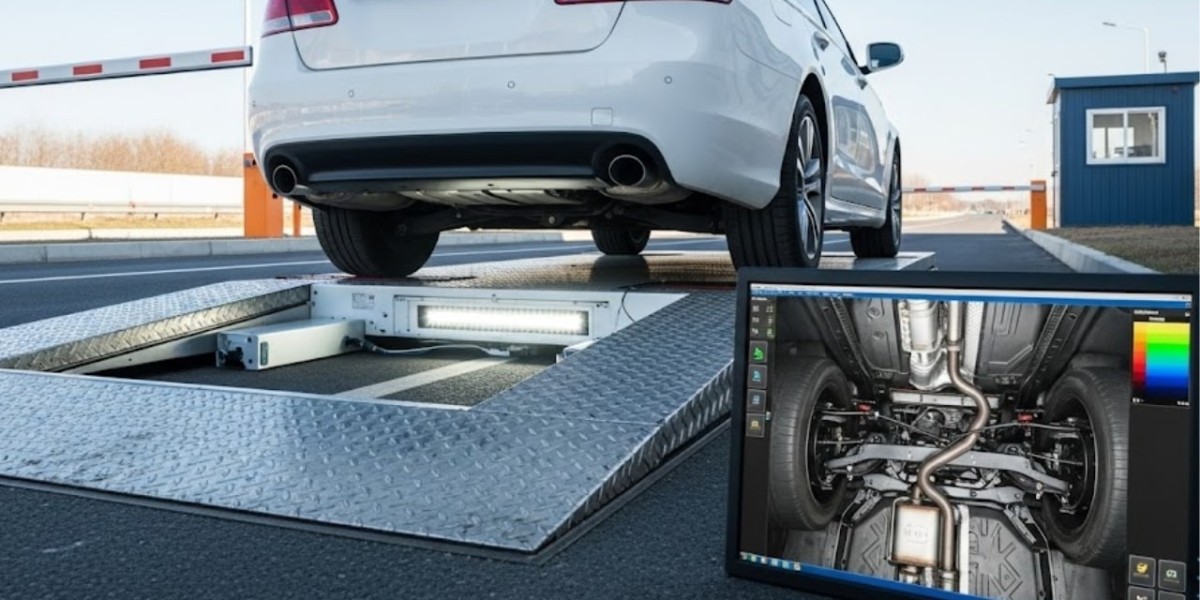
Advanced underbody analysis focuses on improving visibility beneath vehicles as part of a broader security screening process. Rather than relying only on surface-level checks, this approach uses detailed visual capture and analysis to support risk assessment at entry points.
The purpose is to provide security teams with clearer information, enabling them to make faster and more confident decisions. By enhancing what can be seen and reviewed, underbody analysis strengthens the overall inspection process without adding unnecessary complexity.
Addressing the Limits of Manual Inspections
Manual vehicle inspections have long been part of checkpoint operations, but they come with clear limitations. Inspecting hard-to-see areas can be physically challenging and time-consuming. Factors such as poor lighting, weather conditions, and staff fatigue can further reduce effectiveness.
Advanced underbody analysis helps overcome these challenges by delivering consistent visual information regardless of external conditions. This support reduces reliance on individual judgment alone and helps maintain inspection quality across different shifts and locations.
Improving Safety Without Slowing Operations
One of the main challenges at Saudi entry points is balancing safety with efficiency. Facilities cannot afford long queues or delays, particularly at airports, ports, and industrial zones where time-sensitive operations are common.
Advanced underbody analysis supports smoother vehicle flow by enabling faster assessments. Vehicles can be screened efficiently as part of normal movement through checkpoints, reducing congestion while maintaining strong security standards.
Supporting Consistent Security Standards
Consistency is essential for effective security management. Different teams, locations, or times of day should not result in varying inspection quality. Advanced underbody analysis helps standardize the screening process by providing uniform visual data and review procedures.
This consistency is especially valuable for organizations managing multiple sites across Saudi Arabia. Standardized practices strengthen compliance, simplify training, and improve overall risk control.
Enhancing Decision-Making Through Better Visibility
Security decisions are only as good as the information available. Advanced underbody analysis improves visibility in areas that are traditionally difficult to assess, helping teams identify irregularities more confidently.
Clear visual records allow personnel to focus on evaluation rather than searching for potential issues. This improved clarity supports quicker, more accurate decisions at busy checkpoints.
Integration with Modern Security Systems
Today’s vehicle entry points are part of larger security ecosystems that include access control, surveillance, and centralized monitoring. Advanced underbody analysis can integrate with these systems, allowing data to be shared and reviewed across platforms.
This integration improves situational awareness and enables coordinated responses when concerns arise. For Saudi Arabia’s large and complex facilities, such interoperability is a key advantage.
Data, Traceability, and Accountability
Another benefit of advanced underbody analysis is the creation of digital records. Each screening can be documented, providing traceability for audits, investigations, and performance reviews.
In regulated sectors such as energy and transportation, this documentation supports accountability and transparency. Over time, collected data can also help organizations refine security procedures and optimize checkpoint operations.
Advanced Technologies in High-Security Environments
In certain high-risk locations, advanced underbody analysis may be part of a layered approach that includes technologies such as an Under Vehicle Surveillance System alongside other access control and monitoring solutions. In these environments, underbody analysis contributes to a broader strategy focused on risk reduction and informed decision-making.
The emphasis remains on combining technology and human expertise rather than relying on a single solution.
Preparing for Future Security Demands
As Saudi Arabia continues to invest in smart cities, industrial expansion, and mega projects, vehicle security requirements will continue to evolve. Advanced underbody analysis provides a scalable and adaptable approach that aligns with long-term development goals.
By adopting modern analysis methods, organizations can strengthen entry point safety today while preparing for future operational and security challenges.
Conclusion
Advanced underbody analysis plays a significant role in supporting safer vehicle entry points across Saudi Arabia. By improving visibility, reducing reliance on manual checks, and supporting efficient traffic flow, it helps organizations manage risk more effectively. As vehicle volumes and security expectations continue to grow, advanced underbody analysis will remain an important element of modern entry point security strategies across the Kingdom.