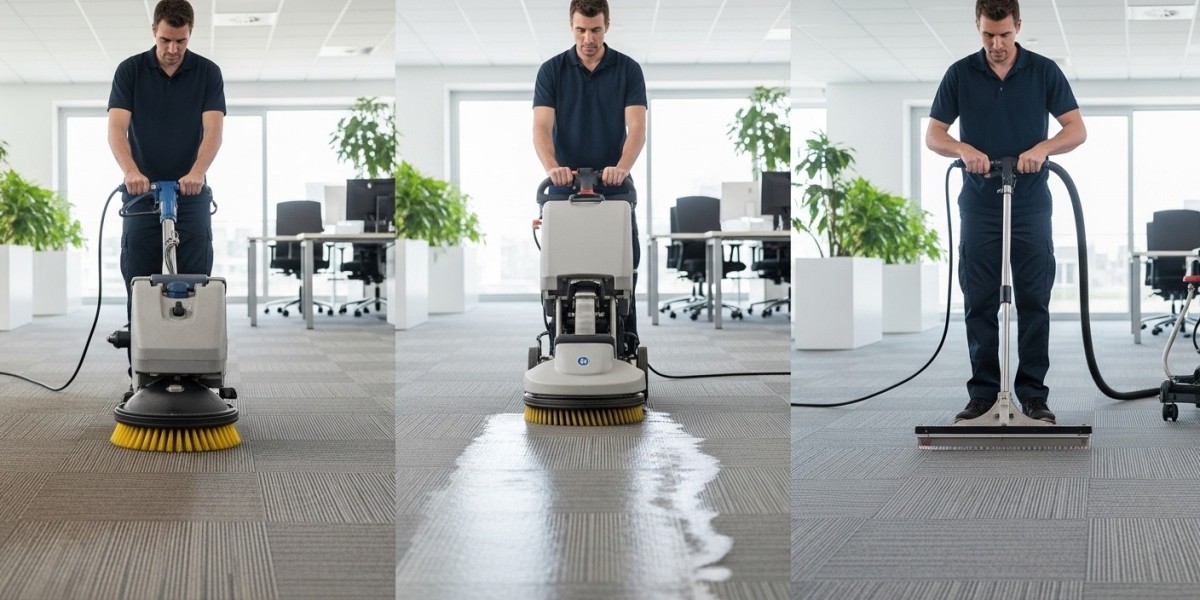

Clean office carpets are more than just a visual detail; they directly impact workplace hygiene, employee comfort, and a company’s professional image. Over time, carpets trap dust, allergens, bacteria, moisture, and heavy foot-traffic residue, which can reduce indoor air quality and shorten carpet life if not properly maintained. That’s why choosing the right commercial carpet cleaning method is a crucial decision for any office environment.
Among professional options, commercial carpet shampooing is often favored for its affordability, visible cleaning results, and strong agitation power. However, it’s not the only solution available. Methods like encapsulation and hot water extraction each offer unique benefits and limitations depending on office size, traffic levels, and drying time requirements. In this guide, we’ll break down how each method works, where it performs best, and how to choose the most effective carpet cleaning approach for your office.
Why the Right Carpet Cleaning Method Matters in Offices
Commercial offices experience consistent foot traffic throughout the day. Employees, visitors, deliveries, food spills, and moisture from shoes all contribute to carpet wear and contamination. When the wrong cleaning method is used, it can result in problems such as:
Faster re-soiling of carpets
Trapped moisture leading to odor or mildew
Damage to carpet fibers and backing
Increased allergens affecting employee health
Operational downtime due to long drying times
A professional cleaning strategy should not only improve appearance but also protect carpet investment, support indoor air quality, and fit smoothly into business operations.
Understanding Carpet Shampooing in Commercial Settings
Carpet shampooing is a traditional yet still widely used cleaning technique in commercial environments. It relies on foaming detergents and mechanical agitation to loosen soil that has become embedded deep within carpet fibers over time.
The method is particularly effective for carpets that show visible traffic lanes, grease buildup, or dull appearance caused by long-term neglect.
How the Process Works
The cleaning process typically follows a structured sequence:
Thorough pre-vacuuming removes loose debris
A foaming detergent is applied evenly
Rotary or cylindrical brushes agitate fibers
Soil and stains are lifted toward the surface
Residue is removed through vacuuming after drying
This mechanical action is what gives shampooing its strong visual impact.
Strengths of Carpet Shampooing
Excellent agitation for heavily soiled areas
Noticeable improvement in carpet appearance
Cost-effective for large floor areas
Useful for restoring neglected carpets
Limitations to Consider
Longer drying times compared to low-moisture methods
Risk of residue if detergent is overused
Requires skilled handling to avoid fiber stress
Because of these factors, this method is best scheduled during off-hours or weekends.
Ideal Office Environments
Warehouses and industrial offices
Manufacturing facilities
Budget-conscious operations
Older carpets needing appearance restoration
What Is Encapsulation Carpet Cleaning?
Encapsulation is a modern, low-moisture carpet cleaning approach designed for routine maintenance rather than deep restoration. It uses synthetic cleaning agents that surround dirt particles and crystallize as they dry.
Once dry, the encapsulated soil is removed through regular vacuuming, leaving minimal moisture behind.
How Encapsulation Works
A light cleaning solution is sprayed on the carpet
A machine agitates the fibers gently
Dirt becomes trapped inside microscopic crystals
Crystals dry quickly and are vacuumed away
Advantages of Encapsulation
Extremely fast drying times
Minimal disruption to office operations
Reduced risk of mold or odors
No sticky residue left behind
Disadvantages of Encapsulation
Limited effectiveness on deep stains
Does not flush out heavy contaminants
Less effective for allergy-sensitive environments
Best Applications
Corporate offices with daily foot traffic
Call centers and shared workspaces
Educational facilities
Hotels and conference areas
Encapsulation works best as a maintenance solution, not a replacement for deep cleaning.
What Is Hot Water Extraction (Steam Cleaning)?
Hot water extraction is widely regarded as the most thorough carpet cleaning method available. It uses pressurized hot water combined with professional detergents to dissolve and extract deeply embedded soil.
This method removes contaminants rather than just lifting them to the surface.
How the Process Works
Carpet is pre-treated with cleaning agents
Hot water is injected deep into fibers
Dirt, oils, and allergens dissolve
Powerful suction extracts water and debris
Key Benefits
Deepest level of carpet sanitation
Effective removal of allergens and bacteria
Recommended by many carpet manufacturers
Helps extend carpet lifespan
Drawbacks
Higher cost compared to other methods
Longer drying time
Requires professional-grade equipment
Best-Fit Environments
Medical and healthcare facilities
Corporate headquarters
Offices with allergy concerns
Annual or bi-annual deep cleaning schedules
Side-by-Side Method Comparison
Feature | Shampooing | Encapsulation | Hot Water Extraction |
Cleaning Depth | Medium–High | Low–Medium | Very High |
Drying Time | 6–12 hours | 30–60 minutes | 4–8 hours |
Water Usage | Moderate | Very Low | High |
Best Purpose | Restoration | Maintenance | Deep sanitation |
Cost Level | Moderate | Low | High |
Which Method Is Best for Your Office?
There is no universal winner; the best option depends on your priorities.
Choose Shampooing If:
Carpets are visibly dirty or dull
Budget is a key concern
Visual improvement is needed quickly
Choose Encapsulation If:
Minimal downtime is essential
Carpets are cleaned frequently
Soil levels are light
Choose Hot Water Extraction If:
Hygiene and air quality are critical
Carpets need a deep reset
Long-term carpet care is the goal
Professional Recommendation
Most commercial cleaning experts recommend a combined approach:
Low-moisture cleaning for routine upkeep
Shampooing for periodic restoration
Deep extraction once or twice per year
Cost Considerations
While prices vary by region and carpet condition:
Encapsulation is the most economical
Shampooing offers a balance of cost and results
Hot water extraction delivers premium cleaning at a higher price
Choosing based solely on cost can lead to higher long-term expenses if carpets wear out prematurely.
Environmental and Health Factors
Low-moisture methods reduce water waste
Deep extraction improves indoor air quality
Residue-free cleaning prevents re-soiling
Always work with trained professionals using commercial-grade, safe cleaning solutions.
Conclusion
Selecting the right carpet cleaning method is a strategic business decision, not just a routine maintenance task. Offices must carefully balance cleanliness standards, operational downtime, cleaning costs, and the long-term health of their carpet investment. When comparing options like rotary bonnet vs encapsulation vs HWE commercial, it becomes clear that each method serves a different purpose depending on carpet condition, usage intensity, and hygiene requirements.
For many workplaces, the most effective approach is not choosing a single method, but adopting a balanced, year-round strategy that combines multiple cleaning techniques. This ensures carpets remain visually appealing, hygienic, and structurally sound while minimizing disruption to daily operations. By evaluating carpet age, foot traffic patterns, and overall business priorities, office managers can confidently select a solution that truly supports a healthier, more professional work environment.
Frequently Asked Questions
1. Is carpet shampooing suitable for all office carpets?
Yes, when performed by professionals using proper techniques.
2. How often should office carpets be cleaned?
High-traffic areas should be cleaned every 3–6 months.
3. Which method dries the fastest?
Encapsulation usually dries within an hour.
4. Which method removes allergens best?
Hot water extraction provides the deepest allergen removal.
5. Can residue damage office carpets?
Yes, improper cleaning can lead to faster re-soiling.
6. Is low-moisture cleaning enough on its own?
No, it works best as maintenance between deep cleans.
7. What method is best for old carpets?
Shampooing is effective for improving appearance.
8. Does steam cleaning damage carpet fibers?
Not when done correctly by trained professionals.
9. Can offices combine different methods?
Yes, combining methods is often the most effective strategy.
10. How do I choose a reliable carpet cleaning service?
Look for experience, certifications, and transparent processes.