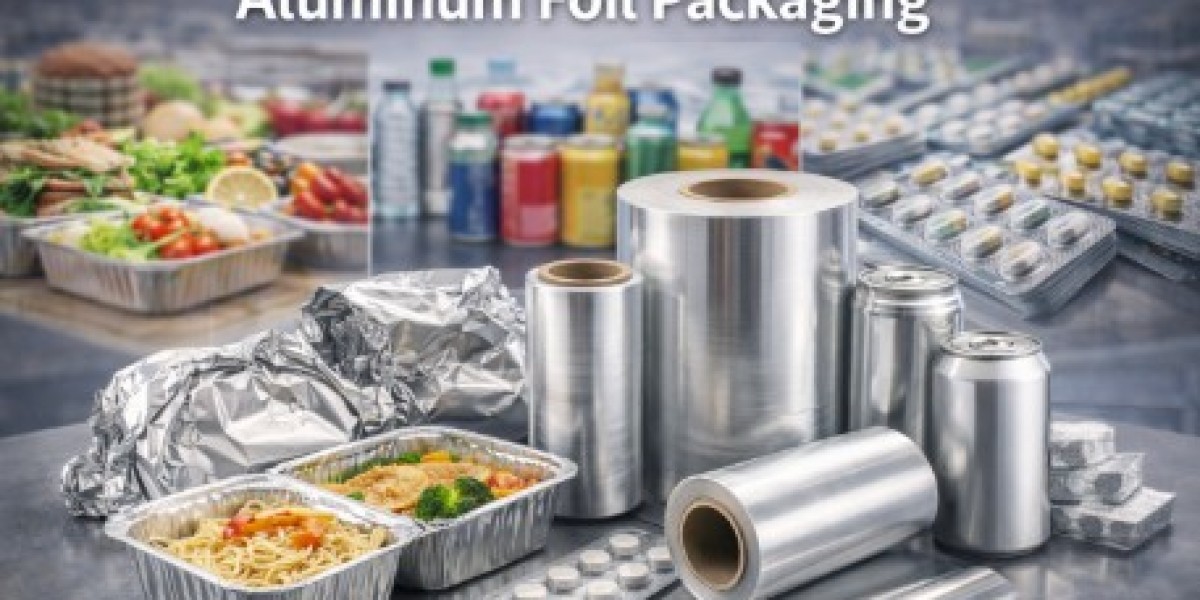

The aluminum foil packaging market is projected to grow from USD 15.49 billion in 2025 and to reach USD 19.21 billion by 2030, at a Compound Annual Growth Rate (CAGR) of 4.39% during the forecast period. This research analyzes major aluminum foil packaging market drivers, restraints, challenges, and emerging opportunities, while highlighting innovation trends and financial insights influencing competitive strategies. The aluminum foil packaging market is expanding due to increasing demand from various end users, including food, beverages, and pharmaceuticals. This growth is further propelled by rising e-commerce sales and the adoption of sustainable and eco-friendly packaging solutions.
Download PDF Brochure: https://www.marketsandmarkets.com/pdfdownloadNew.asp?id=204188319
☑️ Aluminum Foil Packaging Market Dynamics
? Driver: Strong Demand from End-Use Industries
The aluminum foil packaging market is significantly driven by rising demand from pharmaceutical, food, and cosmetics industries, where product protection and shelf-life extension are critical. In pharmaceuticals, aluminum foil is widely used in blister and strip packaging due to its excellent barrier properties against moisture, oxygen, light, and contaminants, ensuring drug stability and regulatory compliance. Growing consumption of generic drugs and unit-dose packaging further supports demand.
In the food sector, aluminum foil helps preserve freshness, flavor, and nutritional value in ready-to-eat meals, dairy products, snacks, and beverages, especially in hot and humid regions. The cosmetics and personal care industry also relies on foil-based seals, sachets, and tubes to protect sensitive formulations from oxidation and contamination. Rapid urbanization, organized retail expansion, e-commerce growth, and evolving consumer lifestyles continue to accelerate demand across these sectors.
? Restraint: Volatility in Raw Material Prices
Fluctuating prices of primary aluminum remain a key restraint for the aluminum foil packaging market. Aluminum costs are highly influenced by energy prices, mining output, geopolitical tensions, trade policies, and supply-demand imbalances. Since energy accounts for a major portion of production costs, changes in electricity prices directly impact foil manufacturing expenses and profit margins.
This volatility makes long-term pricing contracts challenging and creates financial pressure for manufacturers, particularly small and mid-sized converters. In cost-sensitive industries like food and cosmetics, rising prices may encourage a shift toward alternative materials such as plastic films or metallized substrates, limiting aluminum foil adoption.
Get a Sample Copy of This Report: https://www.marketsandmarkets.com/requestsampleNew.asp?id=204188319
? Opportunity: Supportive Regulations and Government Initiatives
Emerging regulations and policy initiatives present strong growth opportunities for aluminum foil packaging. Governments worldwide are enforcing stricter standards for food safety, pharmaceutical packaging, and contamination prevention, increasing demand for high-barrier materials like aluminum foil. In pharmaceuticals, the need for tamper evidence, drug stability, and traceability further strengthens its importance.
Sustainability-driven policies promoting recyclability, plastic reduction, and circular economy models also favor aluminum due to its high recyclability and material recovery value. Investments in recycling infrastructure, low-carbon aluminum production, and domestic manufacturing incentives—particularly in Asia Pacific and emerging economies—are enhancing market prospects.
? Challenge: Recycling of Multi-Layer Aluminum Foil Structures
Although aluminum is inherently recyclable, multi-layer foil packaging structures pose a significant challenge. Aluminum foil is often laminated with plastics, paper, or coatings to improve strength and functionality, making separation difficult using conventional recycling methods. As a result, recycling rates remain low, and waste generation increases.
Growing regulatory and consumer focus on sustainable packaging has intensified pressure to improve recyclability. However, limited collection systems and the absence of standardized recycling processes, especially in developing regions, hinder progress. While innovations such as mono-material designs, delamination technologies, and chemical recycling are being explored, large-scale commercialization is still evolving. Balancing high barrier performance with recyclability and cost efficiency remains a critical challenge for long-term sustainability.
By product type, the containers segment accounted for the second-largest share in 2024.
Aluminum foil containers accounted for the second-largest share, as they are widely used in ready-to-eat meals, foodservice, and takeaway products, where heat resistance, structural rigidity, and food safety are paramount. The containers are resistant to high oven temperatures and can also be frozen; therefore, they can be used to bake, reheat, and preserve food without needing to transfer it to a new container. The emerging trends in the growth of quick-service restaurants, airline catering, institutional food services, and home meal replacement have resulted in high demand for disposable yet long-lasting foil containers. Aluminum foil containers are also valuable in terms of their barrier properties against moisture, light, and oxygen, thereby preserving food quality during transportation and storage. Containers are more convenient and mechanically stronger, especially when used with semi-liquid and solid foods, compared to flexible foil formats. Their recycling capabilities are also consistent with their sustainability programs, particularly in places where recognized structures for aluminum collection exist, which substantiates their competitive stance behind foil wraps and rolls to a greater degree.
Speak to Expert: https://www.marketsandmarkets.com/speaktoanalystNew.asp?id=204188319
By packaging type, the flexible segment accounted for the second-largest market share in 2024.
The flexible segment accounted for the second-largest share of the aluminum foil packaging market in 2024. Flexible aluminum foil packaging is primarily used in pouches, sachets, wraps, and laminated structures for food, beverage, pharmaceutical, and personal care products. Flexible foil packaging offers a good trade-off between high barrier performance and material efficiency, allowing for lightweight packaging that reduces transportation costs and total material usage. It is also used specifically with products that have a long shelf life, need to retain aroma, and have to keep out of oxygen and moisture, like snacks, dairy products, coffee, and powdered foods. The flexibility of the formats, including sealing, printing methods, and forming technologies, helps support branding and convenience features such as resealability and portion sectioning. Although semi-rigid packages are predominant due to their strength and versatility, flexible foil packages are second in terms of volume, as they offer similar barrier properties at reduced material usage and costs, making them extremely appealing for mass-market and single-serve packages.
By application, the pharmaceutical segment is expected to be the fastest-growing segment during the forecast period.
Pharmaceutical is the fastest-growing application segment of aluminum foil packaging, driven by the increasing global demand for healthcare services, the rising use of medications, and stricter regulatory requirements. Aluminum foil plays a crucial role in blister packs, strip packs, and sachets, as it provides an impermeable barrier against moisture, oxygen, and light. This makes it essential to ensure the protection and efficacy of pharmaceutical products. The increased use of high-quality foil-based packaging is driven by the rising production of generic drugs in developing countries, as well as stricter adherence to international pharmacopeia standards. Although the volume of pharmaceuticals may be less than that of the food and beverage industry, pharmaceuticals command a higher value per unit. Additionally, regulatory upgrades and the rapid growth of healthcare facilities contribute to making pharmaceuticals the fastest-growing end-use sector for aluminum foil packaging.
Middle East & Africa to register the second-fastest growth rate in the aluminum foil packaging market during the forecast period.
The Middle East and Africa (MEA) is projected to experience the second-highest CAGR in the aluminum foil packaging market. This growth is driven by factors such as urbanization, population growth, and an increasing demand for packaged food, beverages, and pharmaceuticals. Rising disposable incomes and changing lifestyles are driving demand for convenience foods and ready-to-drink products, which rely heavily on aluminum foil to maintain extended shelf life in hot and humid conditions. The region’s climatic challenges necessitate high-barrier packaging to protect products from heat, moisture, and light. Additionally, the growing production of pharmaceuticals in countries like Saudi Arabia, the UAE, Egypt, and South Africa is contributing to the demand for blister and strip packaging. Market growth is further supported by government investments in healthcare and food security, as well as improvements in the country’s production capabilities. The expansion of retail and advancements in packaging infrastructure are also contributing to this trend. While the Asia Pacific region is growing faster due to its larger market size, the Middle East & Africa are experiencing significant growth as they shift toward greater consumption of packaged goods and increasing adoption of foil-based high-barrier packaging solutions.
Inquire Before Buying: https://www.marketsandmarkets.com/Enquiry_Before_BuyingNew.asp?id=204188319
Aluminum Foil Packaging Comapnies
The aluminum foil packaging market comprises major players such as RusAL (Russia), Hulamin (South Africa), Hindalco Industries Ltd. (India), China Hongqiao Group Limited (China), and Amcor plc (Switzerland). Key strategies such as partnerships, acquisitions, product launches, and expansions are employed by leading companies to enhance their positions in the aluminum foil packaging market.
- RusAL (Russia): A major global aluminum producer supplying high-quality foil stock for flexible packaging applications across food, pharmaceutical, and industrial sectors.
- Hulamin (South Africa): Specialized in rolled aluminum products, including foil and sheet solutions serving packaging and converter industries worldwide.
- Hindalco Industries Ltd. (India): A leading integrated aluminum manufacturer offering advanced foil products for FMCG, pharmaceutical, and specialty packaging markets.
- China Hongqiao Group Limited (China): One of the world’s largest aluminum producers, providing cost-competitive aluminum materials supporting large-scale foil packaging demand.
- Amcor plc (Switzerland): A global packaging leader utilizing aluminum foil in high-performance flexible packaging solutions focused on sustainability and product protection.
➤ Reason to Buy:
? Save and reduce time carrying out entry-level research by identifying the growth, size, leading players, and segments in the global Aluminum Foil Packaging Market.
? Scrutinize in-depth global market trends and outlook coupled with the factors driving the market, as well as those restraining the growth to a certain extent.
? Highlights key business priorities in order to guide the companies to reform their business strategies and establish themselves in the wide geography.
? Develop/modify business expansion plans by using substantial growth offerings in developed and emerging markets.
? The key findings and recommendations highlight crucial progressive industry trends in the Aluminum Foil Packaging Market, thereby allowing players to develop effective long-term strategies in order to garner their market revenue.