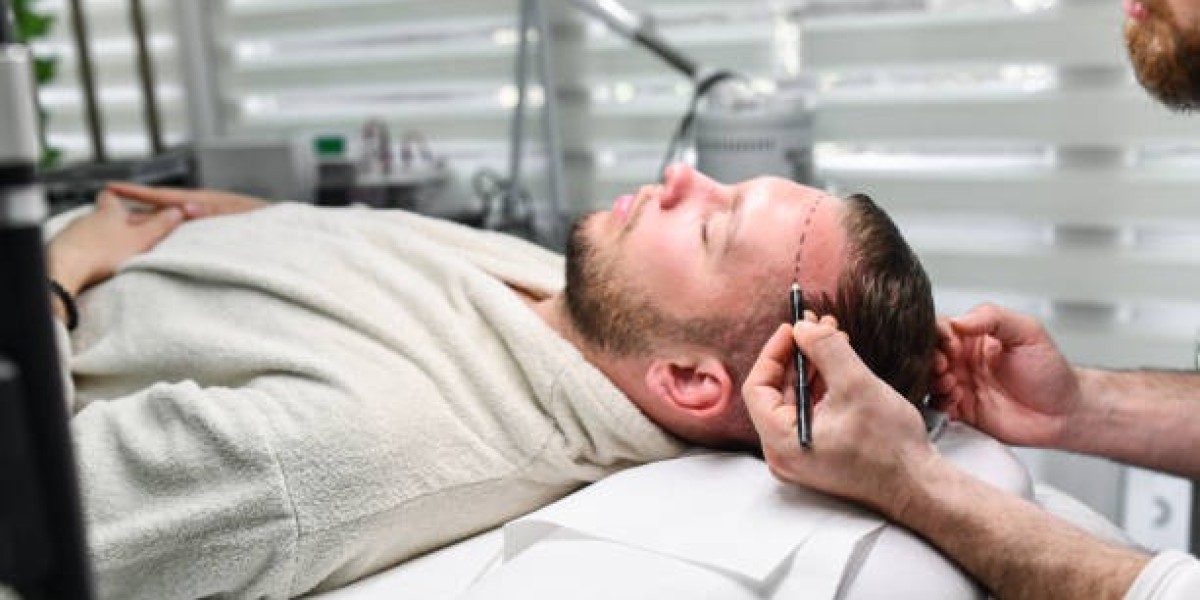

For patients considering surgical hair restoration, the term "scalp laxity" is often the most critical anatomical factor they haven't heard of. In the medical landscape of the UAE, a FUT hair transplant in Dubai (the strip method) is directly dependent on how much the skin at the back of the head can stretch. Because this technique involves removing a sliver of tissue, the flexibility of the donor area determines how many grafts can be safely harvested and how discreet the final scar will be.
This guide provides a clinical overview of why laxity matters, how it is measured, and how you can improve it to optimize your surgical outcome.
Why Scalp Laxity is Critical for a FUT Hair Transplant in Dubai
Scalp laxity is the measure of how much the scalp skin can be moved or stretched over the underlying skull. It is the primary "limit" on the size of the donor harvest.
The Clinical Impact of Skin Flexibility
In clinical settings, we observe that scalp laxity affects three key areas:
Graft Yield: High laxity allows for a wider donor strip, meaning more grafts can be harvested for patients with advanced baldness.
Closure Tension: Flexible skin allows the incision to be closed with minimal tension, which is essential for a fine, "pencil-line" scar.
Post-Op Comfort: Patients with good laxity report significantly less "tightness" in the donor area during the first week of recovery.
Assessing Your Suitability: The Clinical Measurement
During a consultation for a FUT hair transplant in Dubai, your surgeon will perform a physical assessment of your donor zone.
How Scalp Laxity is Tested
Practitioners typically use the Mayer-Pauls scale or a simple physical manipulation:
The Vertical Movement Test: The surgeon places their hands on the back of your head and moves the skin up and down. If the skin moves 10mm to 15mm or more, you have "good" to "excellent" laxity.
The Pinch Test: A gentle pinch helps determine the thickness and "give" of the skin. Tight, thin scalps may be better suited for FUE, while flexible, thicker scalps are ideal for the strip method.
Can You Improve Your Scalp Laxity Before Surgery?
One of the unique aspects of a FUT hair transplant in Dubai is that patients can often "train" their scalp to become more flexible.
Clinical Tips for Scalp Preparation
Based on post-procedure follow-ups, we find that "Scalp Laxity Exercises" (SLEs) can significantly improve results.
The Technique: Placing your hands at the sides or back of the head and firmly massaging the scalp in a circular or vertical motion for 15 minutes a day.
The Timeline: Starting these exercises 4 to 6 weeks before your procedure can increase the possible graft yield by 10% to 20%.
Systemic Health: Staying hydrated and avoiding smoking improves skin elasticity, ensuring a smoother recovery.
Experience-Driven Patient Insights
"I was told my scalp was a bit tight for the 4,000 grafts I needed. The team at Tajmeels taught me laxity exercises. After a month of doing them every night, I was able to get the full amount in one FUT hair transplant in Dubai session." — Adnan
"I didn't realize how much the stretch mattered. Because I had good laxity, the 'tightness' after surgery only lasted a couple of days. My scar is so thin I can't even find it with my fingers." — Sebastian
Frequently Asked Questions
What happens if my scalp laxity is too low?
If the scalp is extremely tight, removing a strip could lead to a wide scar or "stretch back." In these cases, we may recommend a smaller harvest or suggest the FUE method, which does not rely on skin flexibility.
Does scalp laxity change with age?
Yes. Generally, skin becomes more lax as we age. However, factors like smoking, sun damage, and previous surgeries can make the scalp tighter or less elastic.
Can a second FUT hair transplant in Dubai be done if I have low laxity?
It depends on how much skin was removed during the first procedure. A clinical evaluation is necessary to see if the scalp has "loosened up" enough in the years following your first surgery to allow for a second harvest.
Will my scalp stay "stretched" after the procedure?
The scalp has a natural ability to accommodate. While it feels tight for the first 10 days, the skin gradually "relaxes" back to a normal state. Most patients feel no difference in their scalp flexibility 6 months after the procedure.
Why Choose Tajmeels Clinic
At Tajmeels Clinic, we believe in thorough pre-surgical preparation. Our Senior Medical Strategists take the time to accurately measure your scalp laxity before recommending a FUT hair transplant in Dubai. We provide personalized guidance on laxity exercises to ensure you achieve the maximum possible graft yield with the highest level of comfort. Our goal is to align the surgical plan with your unique anatomy, delivering dense, natural results and a discreet donor scar through clinical excellence.