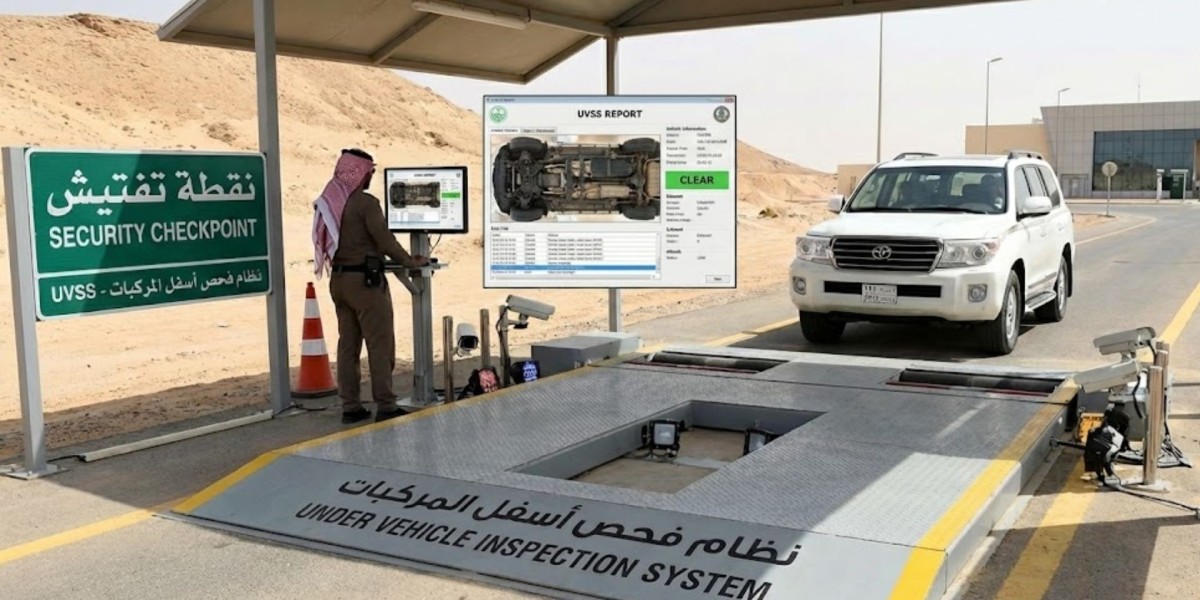

The UAE has built a strong reputation for adopting advanced security practices that align with its rapid economic growth, global connectivity, and large-scale infrastructure development. As airports, ports, government facilities, industrial zones, and commercial hubs have expanded, managing vehicle access securely has become a critical priority. Over the years, vehicle screening technologies across the UAE have evolved significantly, moving from basic manual checks to intelligent, technology-driven solutions designed to meet modern security expectations.
Early Vehicle Screening Practices in the UAE
In the early stages of development, vehicle screening across the UAE relied largely on manual inspection methods. Security personnel performed visual checks, verified documentation, and controlled access through physical barriers. These methods were effective when vehicle volumes were relatively low and facilities were less complex.
Manual screening offered flexibility and relied heavily on the experience of security staff. However, it also depended on consistent attention, favorable environmental conditions, and manageable traffic flow. As the UAE’s infrastructure grew, these traditional methods began to face operational limitations.
Infrastructure Growth and Increasing Vehicle Movement
The UAE’s rise as a global aviation, logistics, tourism, and business hub brought a sharp increase in vehicle traffic at sensitive locations. Airports began handling millions of passengers annually, ports expanded their cargo capacity, and industrial zones grew to support international trade.
With more vehicles accessing high-security areas every day, traditional screening methods struggled to keep pace. Security teams needed to process vehicles faster while maintaining high safety standards, prompting the need for more advanced screening technologies.
Introduction of Technology-Assisted Screening
To address these challenges, vehicle screening in the UAE began incorporating technology to support manual processes. Surveillance cameras, access control systems, and digital monitoring tools were introduced to improve visibility and oversight.
These technologies helped security teams observe vehicle movement more effectively and maintain better control over entry points. While still reliant on human decision-making, technology-assisted screening marked a significant step toward improving consistency and efficiency.
The Role of Automation in Modern Screening
Automation became a key turning point in the evolution of vehicle screening technologies. Automated solutions allowed inspections to be conducted with greater speed and uniformity, reducing dependency on continuous manual effort.
Automation helped facilities manage high traffic volumes more effectively, particularly during peak hours. By standardizing inspection processes, automated screening reduced variability and supported smoother vehicle flow without compromising security.
Enhancing Accuracy and Reducing Human Error
One of the major drivers behind adopting advanced vehicle screening technologies is the need to reduce human error. Fatigue, distraction, and time pressure can affect manual inspections, especially in demanding operational environments.
Modern screening technologies enhance accuracy by providing consistent visual data and structured inspection processes. This allows security personnel to focus on assessment and response rather than repetitive observation, leading to more reliable security outcomes.
Integration With Broader Security Ecosystems
As vehicle screening technologies evolved, integration became a central focus. Screening systems are now commonly connected with access control platforms, surveillance networks, and centralized command centers.
This integration provides a comprehensive view of security operations, enabling faster information sharing and coordinated responses. For complex facilities across the UAE, integrated security ecosystems support improved situational awareness and more effective risk management.
Supporting High-Traffic and High-Risk Environments
The UAE’s airports, ports, and industrial facilities operate in environments where both traffic volume and security expectations are high. Vehicle screening technologies have evolved to perform reliably under these conditions, supporting continuous operations without disruption.
Advanced screening solutions help facilities maintain strong security controls while avoiding bottlenecks that could impact logistics, travel schedules, or commercial activity.
Adoption of Intelligent Screening Solutions
In recent years, intelligent screening solutions have gained prominence as organizations seek more proactive security measures. These solutions focus on improving visibility, consistency, and decision support rather than increasing manual workload.
In some deployments, technologies such as UVSS are incorporated as part of a layered vehicle security approach. These solutions enhance under-vehicle awareness and contribute to closing visibility gaps at entry points while supporting efficient operations.
Data-Driven Security Management
Modern vehicle screening technologies generate valuable data that supports audits, investigations, and performance analysis. Digital records of inspections improve accountability and transparency, which are essential in regulated sectors such as aviation and logistics.
Over time, this data enables organizations to identify trends, optimize processes, and continuously improve their security strategies. Data-driven management has become a key advantage of advanced screening technologies.
Alignment With the UAE’s Smart Infrastructure Vision
The evolution of vehicle screening technologies aligns closely with the UAE’s broader vision for smart infrastructure and digital transformation. Security systems are expected to be scalable, intelligent, and capable of integrating with future technologies.
Advanced screening solutions support this vision by offering flexibility and adaptability as infrastructure continues to grow and evolve.
Preparing for Future Security Challenges
As the UAE continues to host international events, expand smart cities, and develop new industrial zones, vehicle security requirements will continue to evolve. Screening technologies must be capable of adapting to emerging risks and operational demands.
By building on current advancements, organizations can ensure that vehicle screening remains effective, efficient, and resilient over the long term.
Conclusion
The evolution of vehicle screening technologies across the UAE reflects the nation’s commitment to maintaining high security standards while supporting growth and efficiency. From manual checks to intelligent, integrated solutions, vehicle screening has transformed to meet the demands of modern infrastructure. As the UAE continues to advance, these technologies will remain essential in protecting critical assets, ensuring smooth operations, and supporting a secure future.